China produces the majority of the world’s AC/DC power adapters, concentrated in the Pearl River Delta — particularly Shenzhen, Dongguan, and Huizhou. For OEMs building medical devices, industrial controls, audio equipment, LED lighting, or smart-home products, sourcing the adapter from a Chinese manufacturer is often the lowest-cost path to a reliable power supply. But the cost advantage disappears if the supplier is unverified, the certification is wrong for your market, or the quality system collapses at volume.
This guide walks through the complete sourcing process: deciding between factory and trading company, verifying supplier credentials, understanding MOQ and pricing structure, running samples, protecting your IP, negotiating payment terms, defining QC checkpoints, and planning logistics. It is written for procurement engineers and engineering managers who need a repeatable process — not a lucky draw.
First, Define the Technical Specification Before Contacting Suppliers
The single biggest sourcing mistake is contacting suppliers before the specification is locked. Power adapters are safety-certified products; changing output voltage, connector type, or enclosure after certification restarts part of the compliance process and adds weeks.
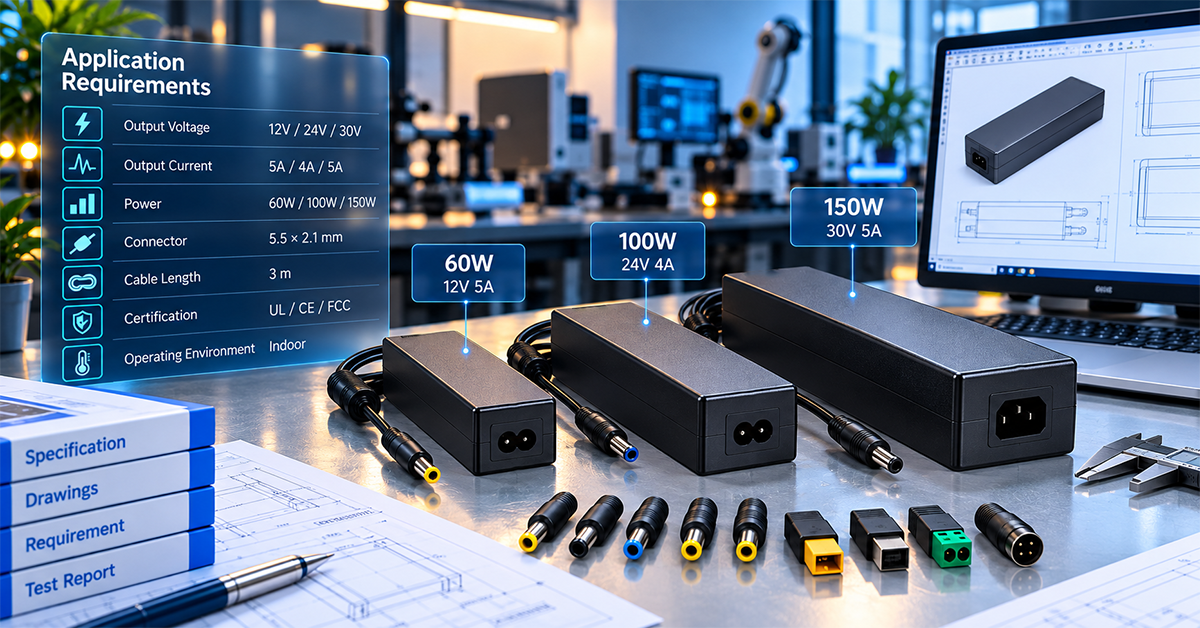
Write a specification sheet that covers at minimum:
- Output voltage and current (e.g., 24V / 2.5A, 60W)
- Input voltage range and frequency (universal 100–240VAC is standard)
- Form factor (wall plug, desktop, open frame) and enclosure dimensions
- Connector type, wire length, and connector polarity
- Efficiency level required (Level VI / ErP 2019/1782 for most markets)
- Target certifications and destination markets (UL 62368-1 for the US, CE for the EU, PSE for Japan, etc.)
- Operating temperature range and mounting constraints
- Protection requirements (OVP, OCP, SCP, OTP)
- Expected annual volume and ramp schedule
- Any application-specific requirements (medical IEC 60601-1, low standby power, EMC limits)
With this document, you can compare suppliers on the same basis and shortlist only manufacturers whose certification scope and product range match your requirement. Certification availability depends on product model, application requirements and destination market — a supplier that “does UL” does not mean every model they make is UL listed.
Why This Matters
- A locked specification is the anchor for every later decision — MOQ, price, lead time, and certification timeline all derive from it
- Suppliers quote differently on loosely defined specs, making comparison meaningless
- Late spec changes are the most common cause of missed launch dates
What OEMs Should Do Now
▸ Freeze voltage, power, form factor, and connector before the first supplier call
▸ Confirm which certifications your target markets require (see the certification timelines below)
▸ Add 20–30% power margin for derating and future revisions
Factory vs. Trading Company — and How to Tell the Difference
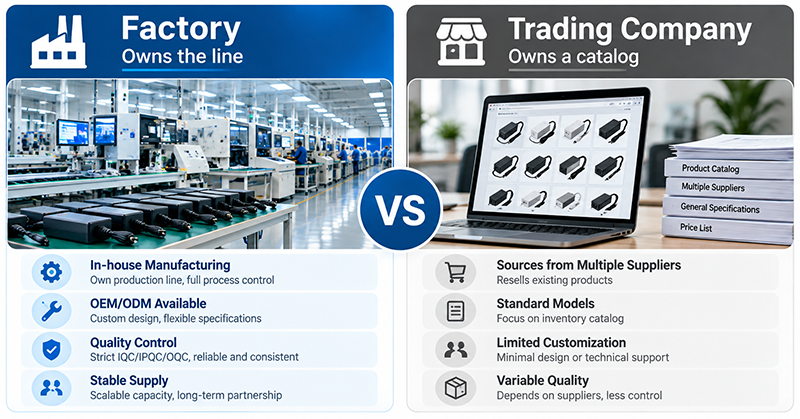
Shenzhen’s electronics ecosystem includes thousands of registered manufacturers and an even larger number of trading companies. Both can deliver working adapters; the difference is control. A factory owns the production line, the SMT equipment, the aging racks, and the test fixtures. A trading company owns a catalog and a network of factories it does not control.
Signals that you are dealing with a trading company:
- The “factory address” is an office building, not an industrial park
- Photos and videos are stock material reused across multiple company names
- The salesperson cannot answer process questions (SMT line count, aging duration, test equipment brand)
- The company name in the contract differs from the name on the business license
- Quoted price moves dramatically with order size — a sign of aggregation, not manufacturing
None of this makes a trading company unacceptable — many OEMs use one for small volumes while they qualify the underlying factory. But your QC leverage is weaker, and you cannot audit a production line you cannot visit. For medical, industrial, and other safety-critical applications, verify that the company you contract with is the company that manufactures.
Why This Matters
▸ QC, certification ownership, and traceability all live at the factory level
▸ If your supplier does not own the line, your audit findings cannot be enforced
▸ Certification marks belong to the manufacturer; a trading company cannot extend your compliance coverage
What OEMs Should Do Now
▸ QC, certification ownership, and traceability all live at the factory level
▸ If your supplier does not own the line, your audit findings cannot be enforced
▸ Certification marks belong to the manufacturer; a trading company cannot extend your compliance coverage
Verify Supplier Credentials — Business License, Certification, and References
Before any money moves, verify three layers: legal existence, certification scope, and real-world references.
Legal existence. Request a copy of the business license. Check the registration capital, business scope, and whether the entity matches the contract. A manufacturer’s license typically lists electronics manufacturing in its scope.
Certification scope. Ask which standards each candidate model actually holds — not what the company claims generally. UL and other NRTL marks are model- and factory-specific and can be verified in the public UL Product iQ database. ETL, TÜV, and BIS registrations are similarly traceable to the manufacturing site. Certification availability depends on product model, application requirements and destination market; the mark on one model is not coverage for another.
References and samples. Ask for 2–3 customer references in your industry and, if possible, an order history summary. Then verify the references by requesting a sample of the exact model you intend to buy and testing it against your specification: output voltage tolerance, ripple, efficiency, protection trip points, and connector fit.
Red flags at this stage: unwillingness to share the business license, vague answers about which factory produces your model, certification documents that are cropped or expired, and references that cannot be reached.
Why This Matters
▸ Certification errors found at customs or during market surveillance cost far more than the audit time that would have caught them
▸ A sample test is the cheapest insurance you will buy in the entire sourcing process
▸ Model-level certification verification protects you from “we can get it certified” promises that never materialize
What OEMs Should Do Now
▸ Verify the UL/ETL listing number in the public database, not the PDF the supplier sends
▸ Buy one sample of the target model and run your own electrical tests
▸ Keep the verification evidence in your supplier file — it is your defense in an audit
MOQ and Pricing — What You Are Really Paying For
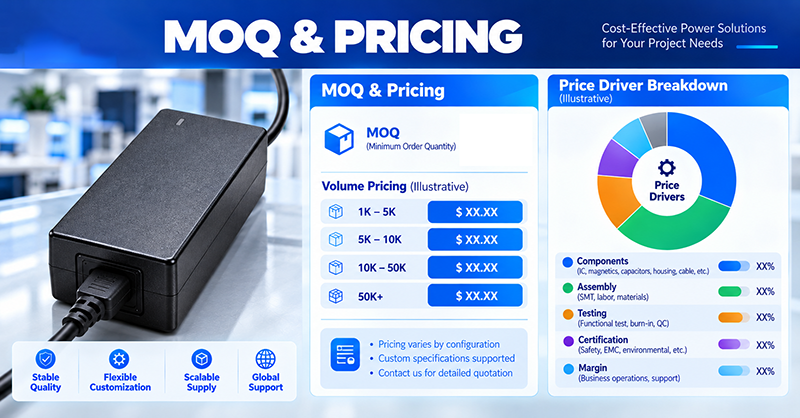
Power adapter pricing follows a predictable structure: components, assembly, testing, certification amortization, and margin. Chinese factories quote an ex-works (EXW) or FOB price that typically assumes a quantity tier. MOQs are commonly 500–1,000 units for standard models and 1,000–3,000 for custom configurations, though this varies by supplier and product complexity.
What drives the price per unit:
- Power rating and topology (higher power, active PFC, or PFC-capable designs cost more)
- Efficiency tier (Level VI components and better magnetics)
- Certification burden (each certification is amortized into the price)
- Enclosure and cable/connector configuration
- Testing requirements (aging, ATE, full functional test)
- Quantity tier and payment terms
Two pricing traps to avoid. First, an unusually low quote usually means untested components or a certification that does not cover your model. Second, a price valid “only for this month” is a pressure tactic; ask for a written price validity period (typically 30–90 days) and a breakdown of what changes the price.
When comparing quotes, normalize them to the same basis: same output spec, same connector, same certification scope, same packaging, same inspection terms. Otherwise you are comparing different products.
Why This Matters
▸ The cheapest quote is only cheap if the certification is valid, the components are genuine, and the yield is high
▸ Unstated extras (mold fees for custom enclosures, certification re-testing, packaging) routinely add 5–15% to the landed cost
▸ MOQ is negotiable — factories often accept lower first orders at a small premium to win the account
What OEMs Should Do Now
▸ Ask for a full cost breakdown: tooling, unit price by tier, packaging, testing, and freight
▸ Confirm the price validity period and what triggers a price change
▸ Plan your first order to fit the MOQ tier that makes the unit price rational — splitting an order to save inventory usually costs more per unit
Sampling — The Milestone That Decides Everything
Never skip the sample stage, and never accept a sample that differs from the production specification. The sample is your only physical evidence that the factory can build what you specified. A proper sampling process has three rounds:
Round 1 — engineering sample. Confirms the electrical design: output voltage/current, ripple, efficiency, protection, EMC behavior, and connector fit. Check dimensions and mounting against your mechanical drawings.
Round 2 — pre-production sample. Built on the production line with production tooling and materials. This is where cosmetic defects, assembly issues, and test-fixture problems surface.
Round 3 — mass-production sample (golden sample). Taken from the actual production run or an approved pilot run, and retained as the reference for your incoming inspection (IQC) and for future order comparisons.
For each round, request the test data the factory generated: efficiency at 25/50/75/100% load, ripple at full load, protection trip points, and (where applicable) the aging record. If the factory cannot produce test data for its own sample, that is a finding in itself.
Why This Matters
▸ A good sample from hand assembly does not guarantee a good product from the line — only round 2 and 3 samples do
▸ Retaining a golden sample gives your IQC a concrete reference for every future batch
▸ Sample test data becomes the baseline for your QC checklist (see the QC section below)
What OEMs Should Do Now
▸ Define acceptance criteria before the sample ships — what will you test, and what are the pass/fail limits?
▸ Test the sample with your own equipment; do not rely on the supplier’s numbers alone
▸ Keep the golden sample and its data sheet in a file that travels with the product
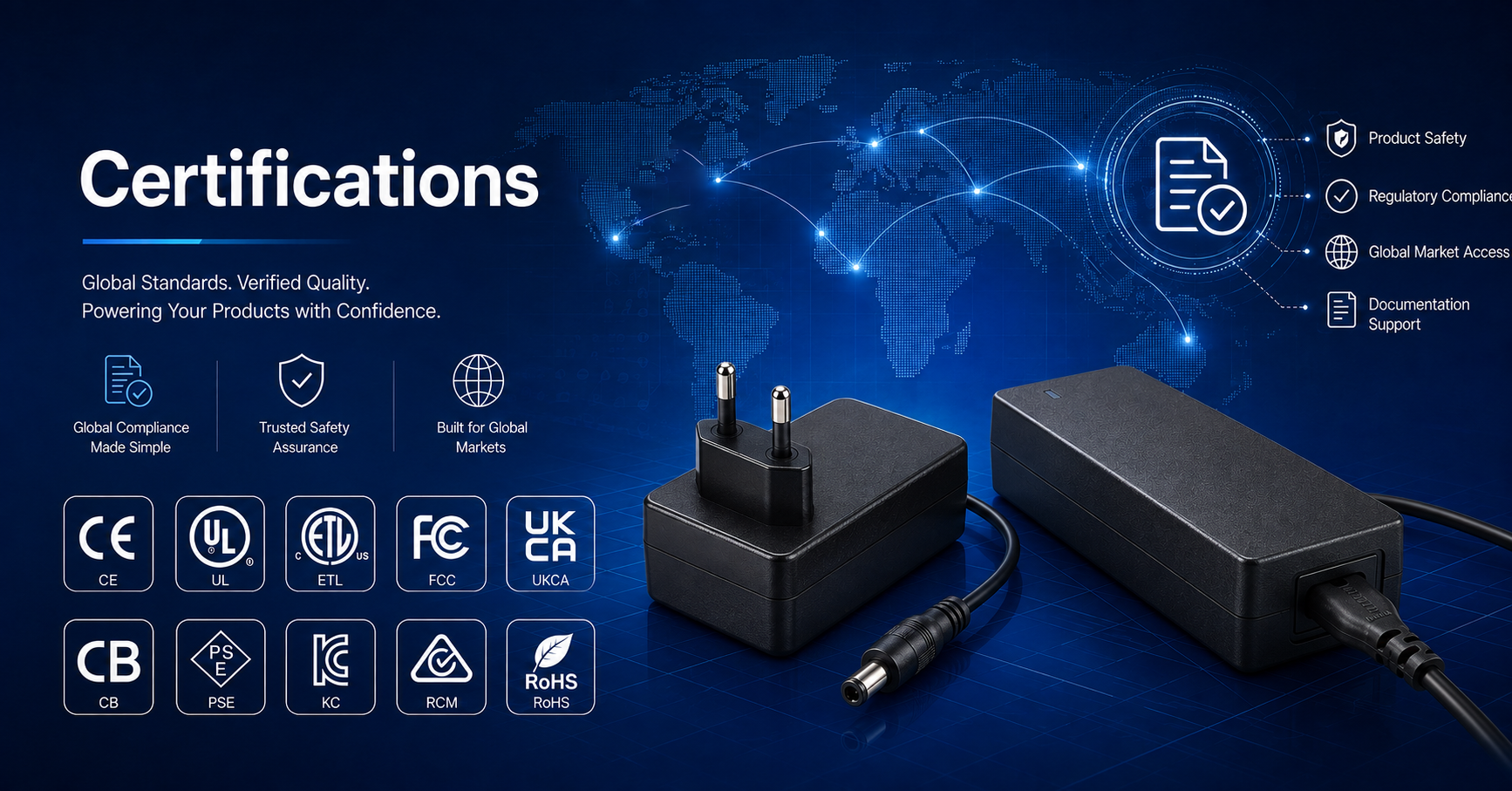
Certification Timelines — Plan Them Into the Schedule
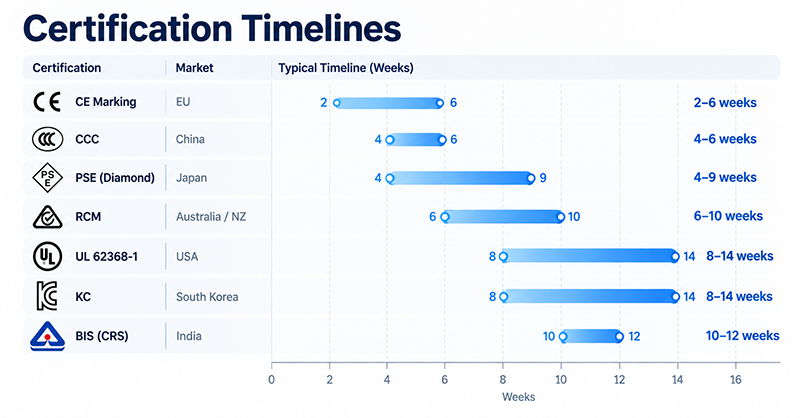
Power adapter certifications are measured in weeks, not days, and they run on the factory’s capacity as much as on the testing lab’s. Using the verified operating values for YHYadapter’s own certification experience (2026-08-23 MASTER ruling):
| Certification | Market | Typical Timeline |
| CE Marking | EU | 2–6 weeks |
| CCC | China | 4–6 weeks |
| PSE (Diamond) | Japan | 4–9 weeks |
| RCM | Australia / NZ | 6–10 weeks |
| UL 62368-1 | USA | 8–14 weeks |
| KC | South Korea | 8–14 weeks |
| BIS (CRS) | India | 10–12 weeks |
These are typical ranges from operating experience; actual timelines depend on the model, the lab’s queue, and whether the design is pre-screened. Certification availability depends on product model, application requirements and destination market. When you plan a launch, add the longest certification on your target list to the overall schedule — and start certification as early as the pre-production sample is stable.
For medical devices, IEC 60601-1 certification adds a dedicated layer: it addresses leakage current, applied-part isolation, and risk management that general ITE standards do not. If your product is a medical device (or is classified as one in your target market), plan for the medical standard from the start — retrofitting medical compliance onto a general-purpose adapter design is expensive.
Why This Matters
▸ Certification is on the critical path for every regulated market — it cannot be compressed by expedited freight
▸ Starting certification after the order is confirmed adds months to the launch
▸ The certification mark must match the model you buy; verify the listing number against your exact configuration
What OEMs Should Do Now
▸ Map target markets → required certifications → timelines before finalizing the supplier
▸ Ask the supplier which certifications the exact model already holds, with listing numbers
▸ Budget for certification cost and timeline in the project plan, not as an afterthought
Protecting Your Intellectual Property
IP protection in cross-border sourcing is a risk-management exercise, not a guarantee. The practical measures that work:
- Non-disclosure agreements (NDAs) with the factory and any engineering contacts
- Contract terms that define IP ownership of custom designs, tooling, and firmware
- Custom tooling owned by you — keep mold and fixture ownership in your name
- Avoid sharing the full end-product design; share only what the adapter requires
- Use model-specific markings and documented configuration control so counterfeits are detectable
- For high-value custom designs, register the design or patent where enforcement is realistic (China now has utility model and design registration that factories respect)
The realistic expectation: a standard adapter built from a standard design is not a strong IP asset, and your protection strategy should focus on the custom elements — your enclosure design, your firmware, your test procedures, your customer relationships. Do not rely on a single NDA; combine contracts, tooling ownership, and configuration control.
Why This Matters
▸ The adapter is a small part of your product, but a copied adapter with your logo is a brand and safety liability
▸ Tooling ownership is the most enforceable practical lever for custom designs
▸ Documentation of your configuration makes it possible to prove copying if you ever need to
What OEMs Should Do Now
▸ Sign an NDA before sharing your specification and drawings
▸ Put tooling ownership and IP assignment clauses in the contract — not in an email
▸ Keep your golden sample and spec under configuration control with revision numbers
Payment Terms and Financial Controls
Standard terms in the adapter industry range from 30% deposit / 70% balance before shipment (T/T) for new accounts, to net 30/60 for established relationships. Letters of credit (L/C) are common for larger orders but carry bank fees and documentation effort.
Protect yourself with these practices:
- Pay deposits only to the contract entity, never to a personal account
- Tie the balance payment to a defined milestone: goods pass inspection, or goods are ready for shipment with inspection report attached
- Define the inspection party (your team or a third-party inspector like SGS/TÜV) and the remedy if inspection fails
- Keep payment terms proportional to trust: new supplier = smaller deposit + third-party inspection; proven supplier = normal terms
- Document everything in the contract: price, validity, MOQ, lead time, inspection terms, warranty, and defect remedy
Warranty is part of the financial picture. A standard adapter warranty in this industry is typically 1–2 years; define what the factory does for defective units (replace, credit, repair) and who pays freight for returns.
Why This Matters
▸ Payment structure is your main leverage over quality — once paid in full, your leverage drops sharply
▸ A defined inspection milestone protects you from paying for goods that do not meet spec
▸ Written warranty terms prevent open-ended disputes
What OEMs Should Do Now
▸ Structure payments around inspection milestones, not around shipment alone
▸ Verify the bank account belongs to the contract entity before the first transfer
▸ Put warranty, defect remedy, and freight responsibility in writing
Quality Control — Inspection Points That Protect Your Brand
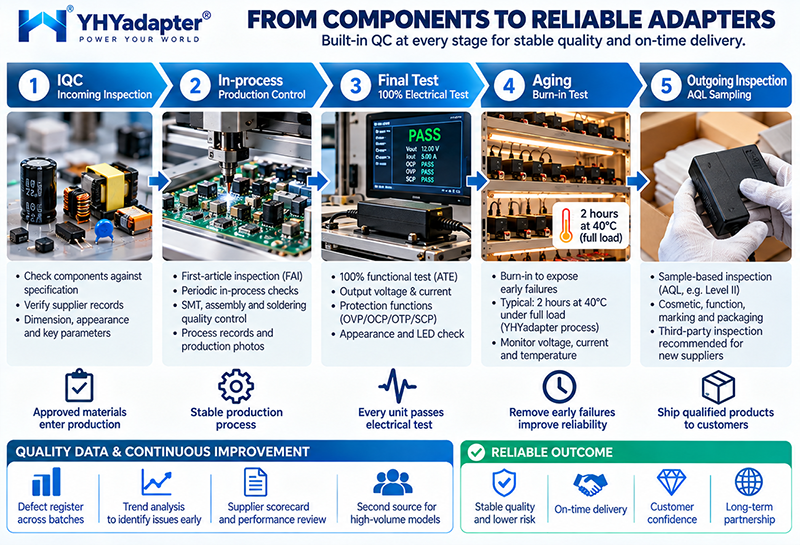
A reliable adapter program builds QC into the process rather than hoping for it. The standard control points:
Incoming (IQC). For every batch, sample-check against your golden sample: dimensions, marking, connector, packaging. The factory’s own IQC should hold records for components.
In-process. SMT and assembly lines should have first-article inspection and periodic checks. If you cannot be on-site, ask for production photos and process records.
Final test. Every adapter should pass an automated final test (ATE) covering output voltage, current limit, and protection functions. Ask what percentage of units is fully tested — the answer should be 100% on electrical function for safety-related products.
Aging / burn-in. A common industry practice is a burn-in period (for example, 2 hours at 40°C under full load for YHYadapter’s manufacturing process) to expose early failures before the unit ships. Ask what the aging duration and conditions are; a factory that skips aging saves cost by shifting early-failure risk to you.
Outgoing inspection. Before shipment, a sample-based inspection (AQL sampling, typically with a third-party inspector for new suppliers) verifies cosmetics, function, and packaging compliance.
Keep a defect register across batches. Trend analysis — a rising defect rate in one area — tells you when a component source or process has changed at the factory.
Why This Matters
▸ AQL sampling catches systemic issues but not every unit; your golden sample and the factory’s 100% final test are the real protection
▸ Aging conditions are a measurable difference between quality factories and price-cutters
▸ Defect trend data gives you evidence in warranty disputes and supplier reviews
What OEMs Should Do Now
▸ Define the inspection plan in the contract: what is tested, at what rate, by whom
▸ Ask for the aging duration/conditions and the final-test coverage in writing
▸ Build a defect register from the first order — you will need the trend data later
Logistics, Incoterms, and Total Landed Cost
The quoted unit price is not the cost you pay. Total landed cost includes freight, insurance, customs duties, import taxes, certification compliance at the border, and your own receiving inspection. Choose the Incoterm that matches your capability:
- EXW (Ex Works): you handle everything after the factory gate — lowest price, most work
- FOB (Free On Board): supplier delivers to the port; you handle ocean/air freight
- CIF (Cost, Insurance, Freight): supplier arranges freight and insurance to destination port
- DDP (Delivered Duty Paid): supplier delivers to your door with duty paid — highest price, least work
For small-to-medium orders, air freight or express (DHL/FedEx/UPS) is common; for volume orders, sea freight dominates. Plan for customs documentation: commercial invoice, packing list, and the certification documents your destination market requires. Some markets require the importer to hold the certification documentation — verify this before ordering.
Why This Matters
▸ Freight and duties commonly add 10–25% to the ex-works price depending on destination and mode
▸ The Incoterm defines who owns the risk at each point — choose deliberately, not by habit
▸ Missing customs documentation can hold goods at the border for weeks
What OEMs Should Do Now
▸ Compute total landed cost per unit, not just the FOB price
▸ Confirm the certification documentation your customs broker needs
▸ Decide the Incoterm based on your freight capability, not the supplier’s preference
Building a Supplier Scorecard and a Second Source
The end state of good sourcing is a qualified supplier base, not a single transaction. Build a scorecard with the factors that matter to you — spec compliance, sample test results, certification validity, on-time delivery, defect rate, communication quality, and price competitiveness — and score every supplier after each order.
Maintain a second source. Power adapters are critical components; a single qualified supplier is a single point of failure. Qualifying a second factory takes time (sampling, testing, certification verification), so start it before you need it. For standard products, keep two qualified suppliers and rotate volume to keep both lines warm.
Why This Matters
▸ Supplier performance is a trend, not a snapshot — score it over orders, not impressions
▸ A second source is insurance against capacity crunches, price shocks, and quality collapses
▸ A warmed-up second line can ramp in weeks, not months, when you need it
What OEMs Should Do Now
▸ Create the scorecard before the first order arrives so baseline data is consistent
▸ Identify and start qualifying a second supplier for your highest-volume model
▸ Review the scorecard quarterly with your engineering team
Sourcing Checklist — 20 Points Before You Place an Order
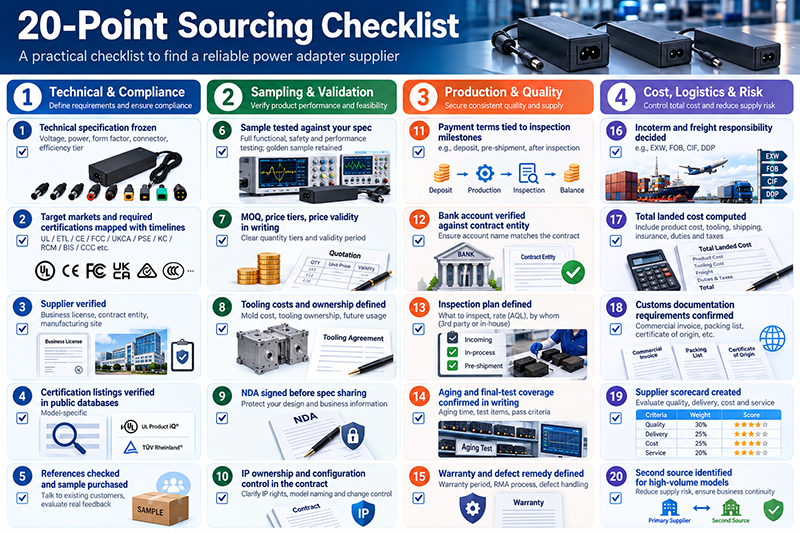
- Technical specification frozen (voltage, power, form factor, connector, efficiency tier)
- Target markets and required certifications mapped with timelines
- Supplier verified: business license, contract entity, manufacturing site
- Certification listings verified in public databases, model-specific
- References checked and sample purchased
- Sample tested against your spec; golden sample retained
- MOQ, price tiers, price validity in writing
- Tooling costs and ownership defined
- NDA signed before spec sharing
- IP ownership and configuration control in the contract
- Payment terms tied to inspection milestones
- Bank account verified against contract entity
- Inspection plan defined (what, rate, by whom)
- Aging and final-test coverage confirmed in writing
- Warranty and defect remedy defined
- Incoterm and freight responsibility decided
- Total landed cost computed
- Customs documentation requirements confirmed
- Supplier scorecard created
- Second source identified for high-volume models
How YHYadapter Fits Into a Sourcing Program
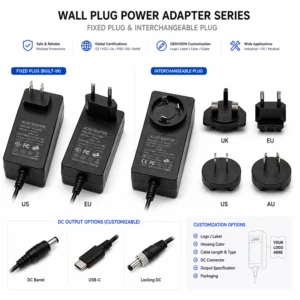
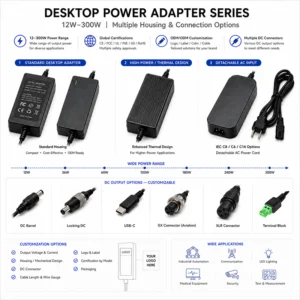
For OEMs building a supplier base, YHYadapter (Shenzhen Yinghuiyuan Electronics Co., Ltd., established 2010) is a manufacturer of AC/DC power adapters, battery chargers, and power supplies across wall plug (1W–65W), desktop (12W–600W), and open-frame platforms — with IEC 60601-1 certified models for medical applications and model-specific certifications including UL 62368-1, CE, FCC, PSE, KC, RCM, BIS, and CCC, available by model. Manufacturing includes a 19-stage process with burn-in aging (2 hours at 40°C under full load), and standard designs carry OVP, OCP, SCP, and OTP protection with a typical service life exceeding 100,000 hours.
Contact the YHYadapter team to request the datasheet and certification listing for your target model, or to discuss a custom configuration.
Frequently Asked Questions
What MOQ should I expect when sourcing power adapters from China?
MOQ depends on whether the model is a catalogue item or a custom configuration, and on how production is scheduled. Ask for it in writing alongside sample and tooling terms, and treat it as a programme input rather than one number.
How long does sampling take?
Sampling timelines depend on whether the model is standard or customised, and on how many specification review rounds are needed. Ask for a staged schedule — sample preparation, approval, first article — rather than a single figure.
How do I verify a supplier’s factory claims?
Check what can be checked: business licence, the scope of any quality system certificate, test records, and — where practical — an on-site or third-party audit. Verify the scope of a certificate rather than its existence.
What payment terms are usual?
Terms vary with order size, product type and relationship history. The useful discipline is to align payment milestones with verifiable events such as sample approval, first article, and pre-shipment inspection.
How do I protect my design when sourcing?
Define what is disclosed and when — drawings, tooling, firmware — keep an NDA in place before technical disclosure, and agree in writing who owns tooling and documentation.
Related Resources
🔌 Related Products
🏭 Related Applications
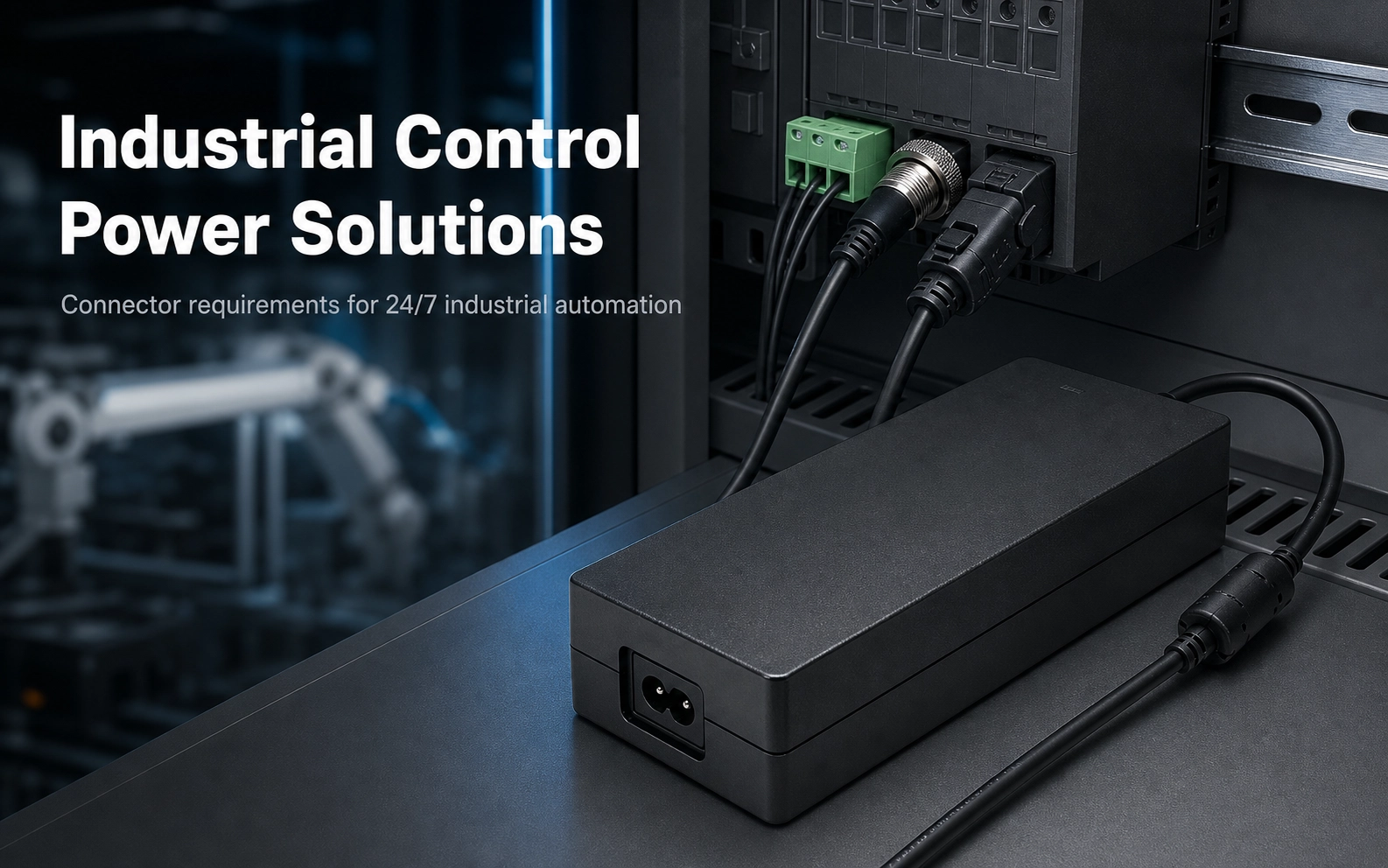
Industrial Control Power Solutions
Power solutions for PLC, CNC, servo and automation equipment
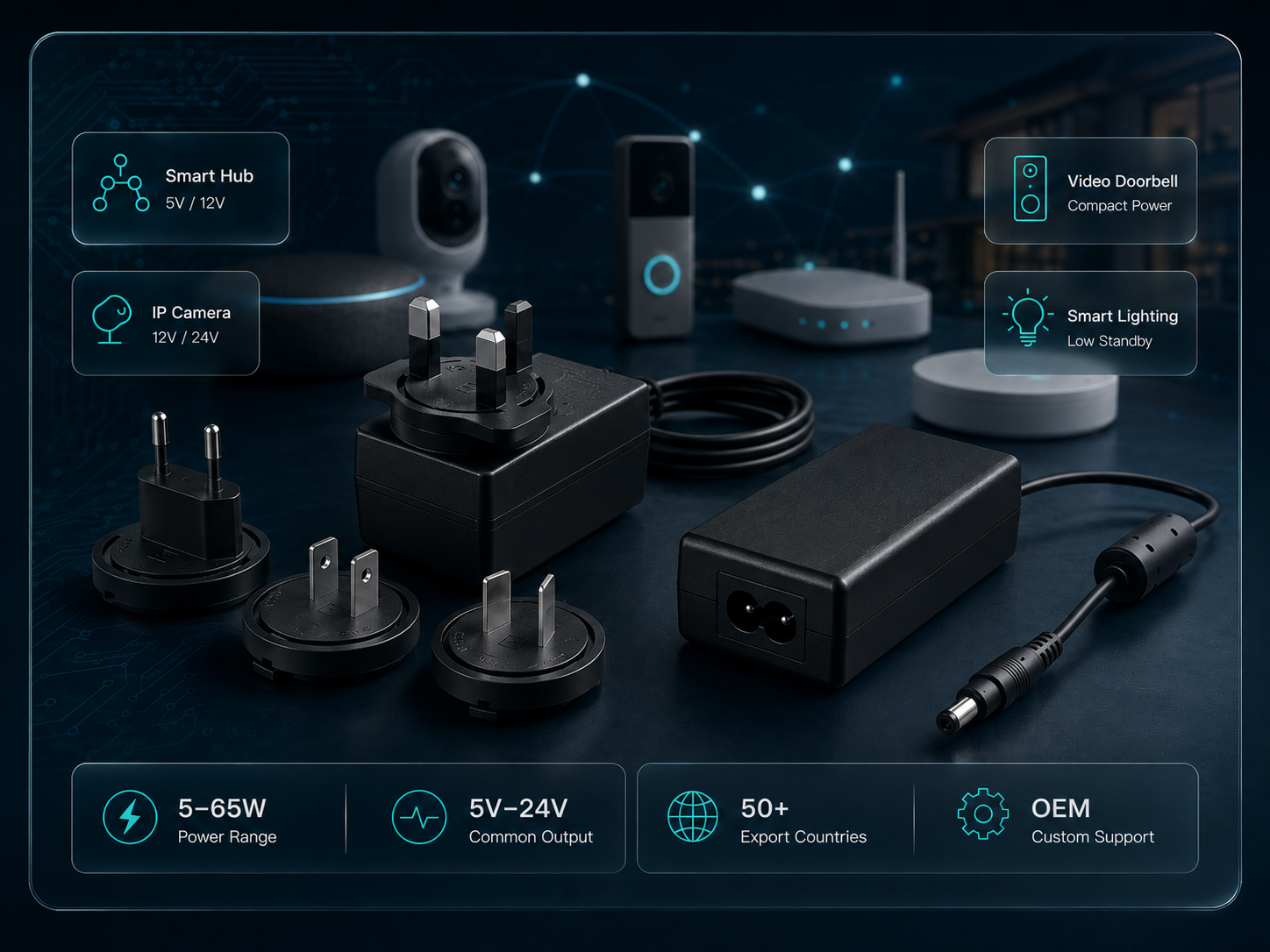
📖 Related Guides
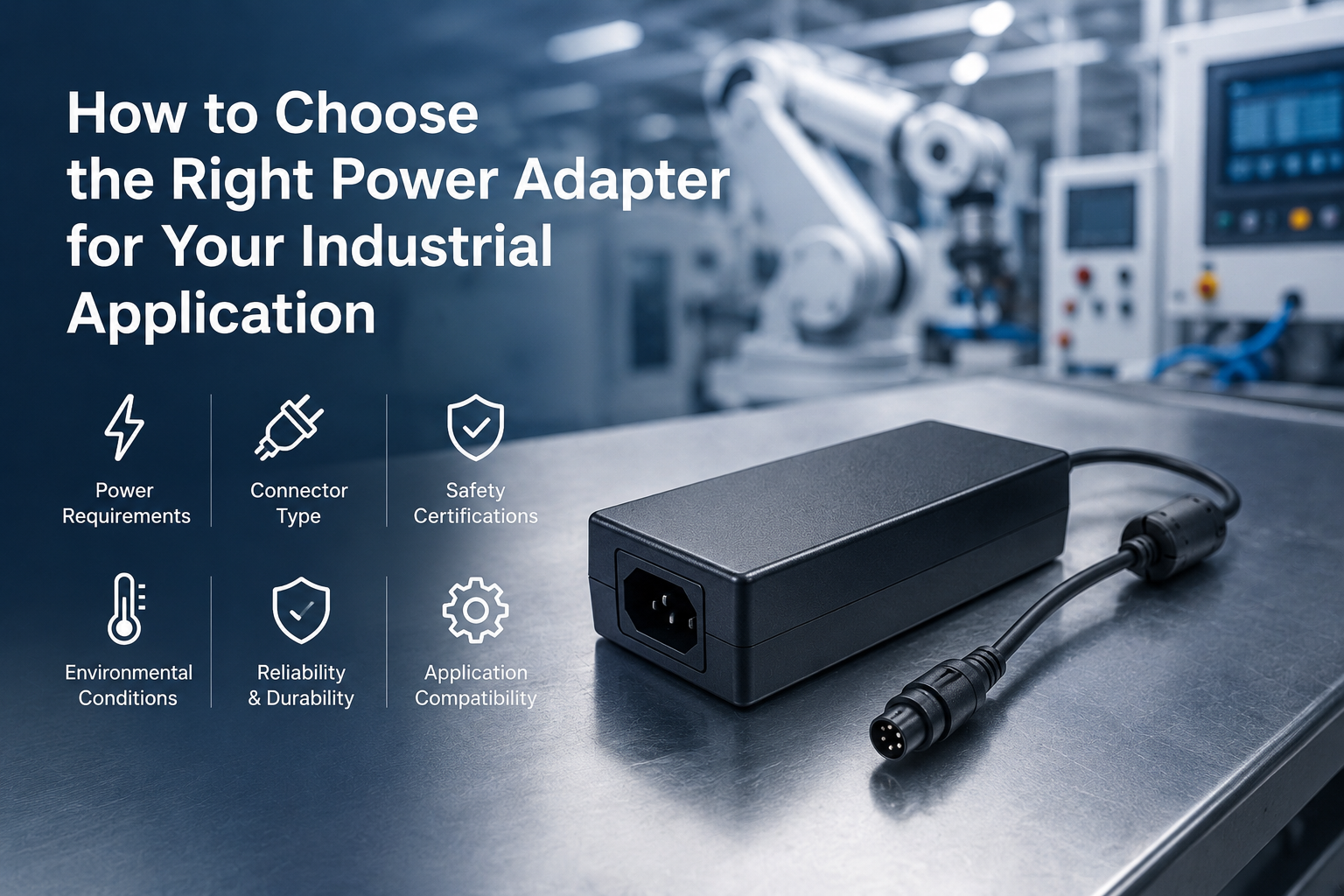
How to Choose the Right Power Adapter for Your Industrial Application
spec-locking companion guide
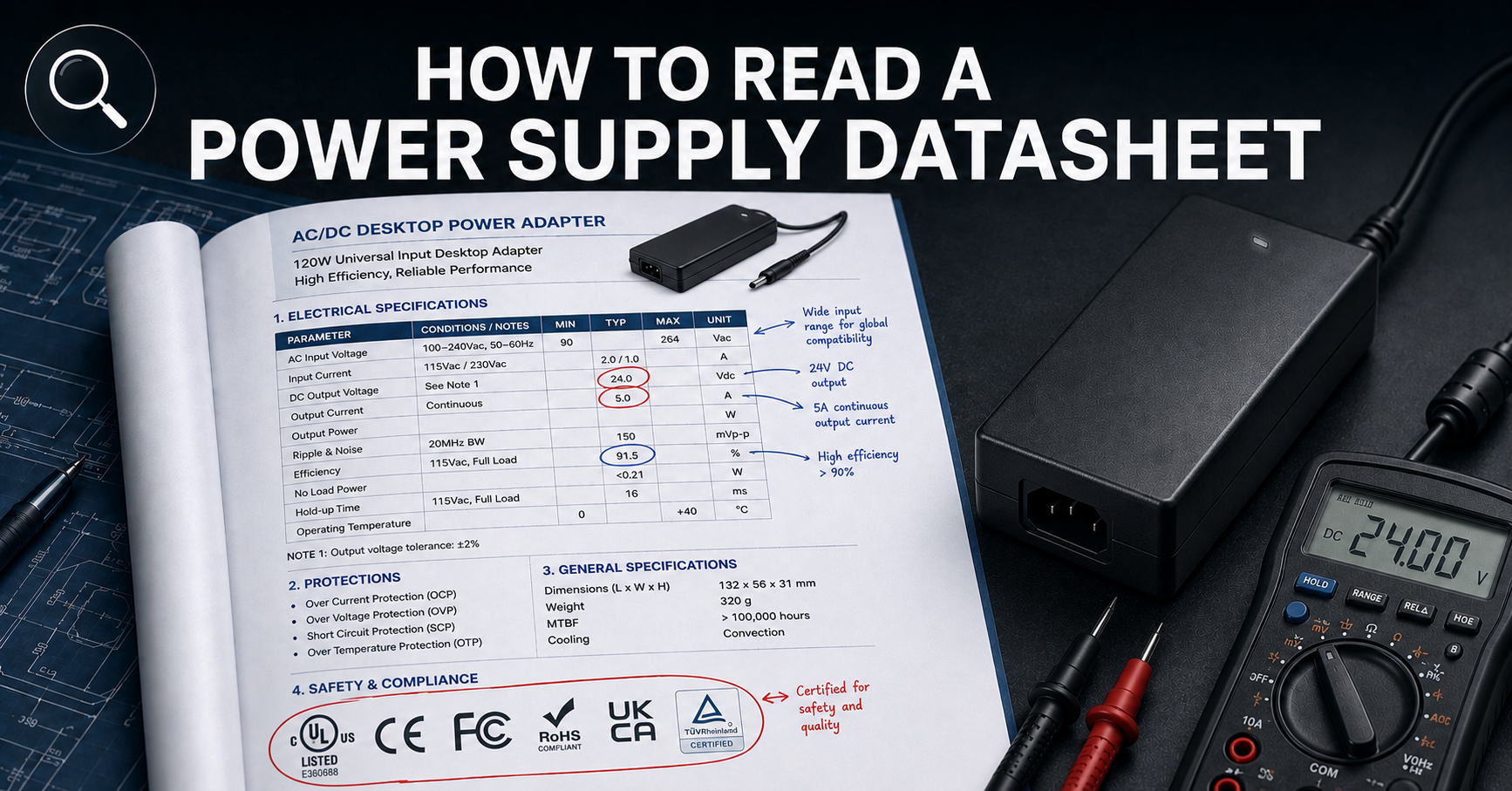
How to Read a Power Supply Datasheet
Learn how to evaluate connector specifications in a datasheet — current ratings, derating curves, certification verification.
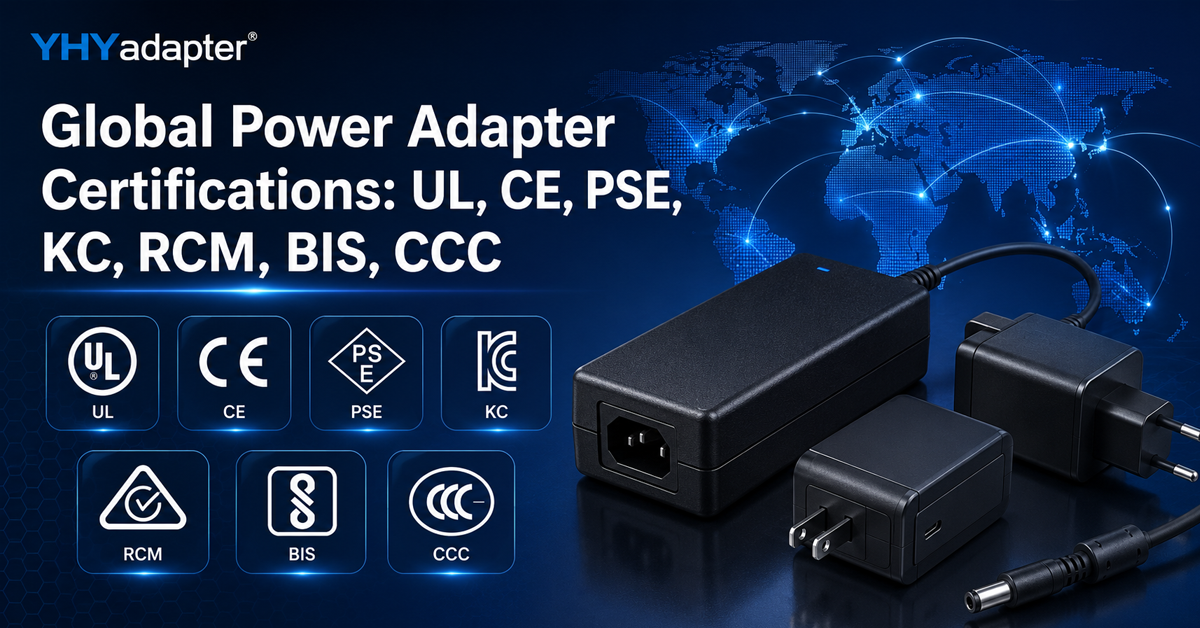
Global Power Adapter Certifications: UL, CE, PSE, KC, RCM, BIS, CCC
certification requirements by market, referenced in the certification timeline section
✅ Related Certifications
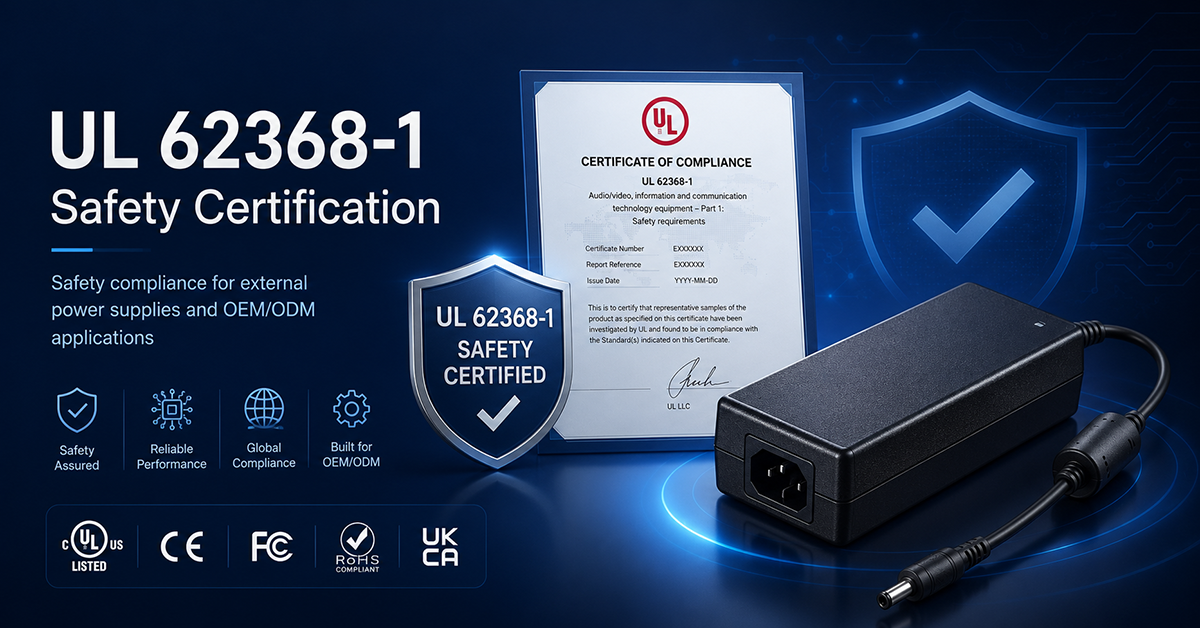
UL 62368-1 Safety Certification
Safety standard covering connector creepage/clearance, temperature rise, and strain relief requirements for IT/AV equipment power adapters.