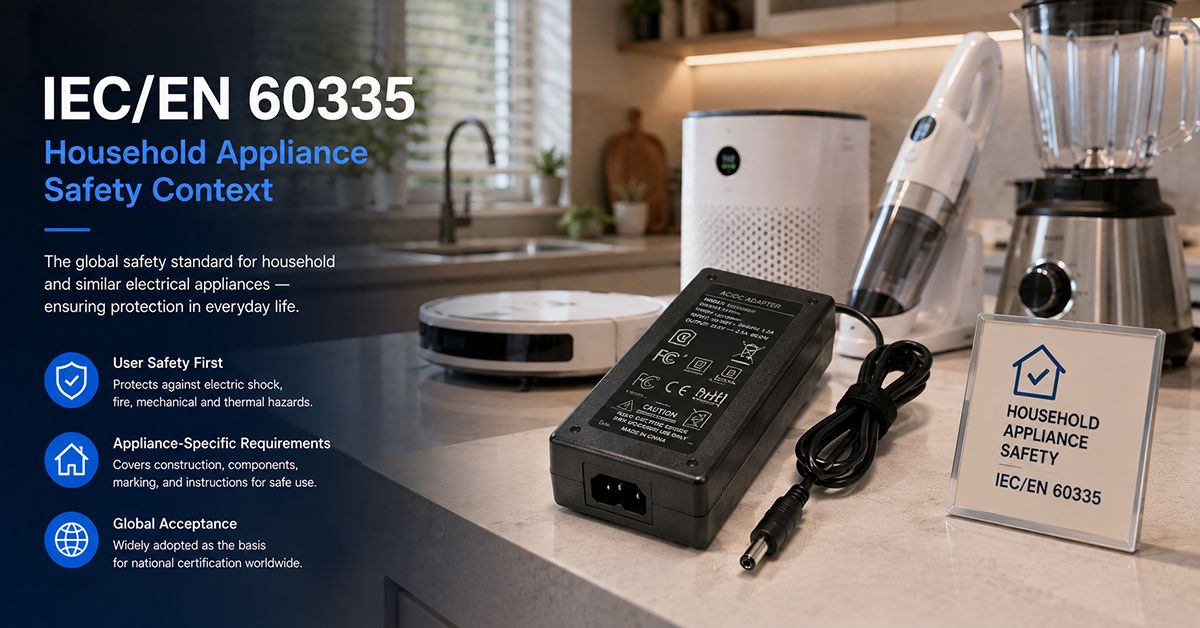
If you sell power adapters into the United States, the two safety standards you will encounter most often are UL 1310 (Class 2 Power Units) and UL 62368-1 (Audio/Video, Information and Communication Technology Equipment). Both are commonly referenced in adapter listings, yet they cover different product classes, different construction requirements, and different certification paths. Choosing the wrong one — or assuming a listing under one covers the other — causes customs delays, failed audits, and expensive redesigns.
This guide explains what each standard actually covers, where they overlap, and — most importantly — how to decide which one applies to your product. It ends with a decision table you can use in your next project review.
What UL 1310 Covers — Class 2 Power Units
UL 1310 is the standard for Class 2 power units — the small power supplies that fall under the National Electrical Code (NEC) Class 2 power-limiting concept. The defining feature of a Class 2 power unit is that its output is inherently limited in power and current, so the wiring on the load side is not required to comply with the more restrictive wiring methods of higher-power circuits.
Key characteristics of UL 1310 scope:
- Output power is limited (the Class 2 limits defined in the NEC — in practice, most listed units are well below 100W, typically 5W–60W for wall-plug adapters)
- Output is considered safe for direct connection to limited-power circuits
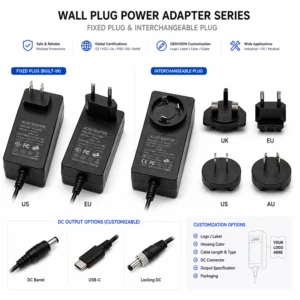
- Commonly applies to wall plug adapters, low-power desktop adapters, and chargers for consumer/ITE equipment
- Construction requirements focus on insulation, enclosure, temperature, and the power-limiting means
- Often paired with a Class 2 marking on the product label
It is important to note that UL 1310 is not the only low-power option: some adapters are listed under UL 62368-1 with a Limited Power Source (LPS) output classification, which achieves a similar wiring-simplification benefit. The two are related but the evaluation frameworks differ.
Why This Matters
▸ UL 1310 scope is tied to Class 2 power limits — not every low-wattage adapter qualifies automatically
▸ A UL 1310 listing requires the product to be evaluated as a Class 2 power unit, including the power-limiting means
▸ If your adapter is above Class 2 power limits, UL 1310 is the wrong standard
What UL 62368-1 Covers — ITE and AV Equipment Safety
UL 62368-1 is the modern hazard-based safety standard for information technology equipment (ITE), audio/video equipment, and communication equipment. It replaced the earlier pair of standards UL 60950-1 (ITE) and UL 60065 (AV) and uses a hazard-based safety engineering (HBSE) approach: identify energy sources, safeguard against them, and instruct users where safeguarding is not possible.
Key characteristics of UL 62368-1 scope:
- Applies to the equipment itself (the end product), and the power supply is evaluated as a component or as part of the equipment
- Covers a wide power range — from small adapters to large equipment power supplies
- Output classifications include Limited Power Source (LPS), which provides simplified wiring requirements similar in intent to Class 2
- Emphasizes safeguarding against electric shock, fire, mechanical, thermal, and radiation hazards
- Applies to AC-DC adapters used with ITE/AV equipment and, increasingly, to industrial equipment through derivative standards
For a power adapter manufacturer, a UL 62368-1 listing demonstrates compliance with the current safety framework for the equipment your adapter will power. The standard is also the basis for the Canadian (CSA) and international (IEC) equivalents — IEC 62368-1 / EN 62368-1 — which simplifies multi-market certification.
Why This Matters
▸ UL 62368-1 is the current safety framework for the broadest category of powered equipment
▸ An LPS-classified output under 62368-1 gives your customer the wiring simplification they often expect from Class 2
▸ Certification under 62368-1 aligns with IEC/EN versions, easing global rollout
The Practical Differences at a Glance
| Aspect | UL 1310 (Class 2 Power Units) | UL 62368-1 (ITE/AV Equipment) |
| Primary scope | Class 2 power units (limited-power output) | ITE/AV/communication equipment + components |
| Output power | Limited by Class 2 (NEC) limits — typically ≤60W in common adapter form factors | No inherent power ceiling; LPS classification available for low-power outputs |
| Evaluation approach | Power-limiting unit evaluation | Hazard-based safety engineering (HBSE) |
| Typical products | Wall plug adapters 5W–60W, low-power chargers | Desktop adapters across the power range, ITE/AV power supplies |
| Wiring simplification | Class 2 marking per NEC | LPS classification (similar intent) |
| Interchangeability | Not interchangeable with 62368-1 listings | Not interchangeable with UL 1310 listings |
| Related international standards | UL 1310 is US-specific (Canadian equivalent CSA C22.2 No. 223) | IEC/EN 62368-1 — global |
The critical practical point: the two standards are not interchangeable. A product listed to one is not considered listed to the other. Your product’s listing depends on the scope under which it was evaluated — and on the certification marks your target customers require.
Certification Timelines and Cost (YHYadapter Operating Experience)
For project planning, use these verified operating values for UL certification from YHYadapter’s experience (2026-08-23 MASTER ruling):
| Item | Value |
| UL 62368-1 certification (incl. FCC testing) | $8,000–$18,000 · 8–14 weeks |
| UL 1310 (Class 2) evaluation | Typically shorter/smaller scope than full ITE equipment; confirm with the NRTL lab for the specific model |
Certification availability depends on product model, application requirements and destination market. The timeline above is typical operating data, not a quote — request a lab quote for your exact configuration.
Why This Matters
▸ Certification timeline belongs on the critical path of every US-market launch
▸ The same model may need different evaluations depending on how it is classified and marketed
▸ Budget for the specific standard your product falls under — not a generic “UL” line item
Decision Table — Which Standard Applies to Your Product?
Use this table as your first-pass decision tool. Final classification should always be confirmed with your certification engineer and the NRTL lab, because intended use and product construction can change the classification.
| Your product | Output characteristics | Likely standard | Notes |
| Wall plug adapter, 5W–60W, powering consumer/ITE device | Class 2 power-limited | UL 1310 (or UL 62368-1 with LPS) | Either can work; check what your customer’s system requires |
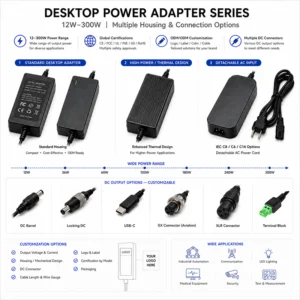
| Desktop adapter, 12W–300W, powering ITE/AV equipment | Above Class 2 limits at higher power | UL 62368-1 | Higher-power adapters typically evaluated to 62368-1 |
| Adapter sold as a component into an ITE/AV end product | Varies | UL 62368-1 (component) | The end-product standard governs; adapter listing supports it |
| Medical device power adapter | Varies | IEC 60601-1 (medical equipment standard) | Medical is a different framework — see the B2 comparison article |
| LED driver / lighting power supply | Varies | UL 8750 / UL 1310 (Class 2) depending on configuration | Lighting has its own standard family; UL 1310 Class 2 is common for low-power LED supplies |
| Charger for battery-powered products | Limited-power output | UL 1310 (Class 2) or UL 62368-1 (LPS) | Depends on the charger classification and end-product standard |
Rule of thumb: if your adapter is a general-purpose wall plug unit under Class 2 power limits, UL 1310 is the traditional path. If your adapter spans higher power, feeds ITE/AV equipment, or must align with a global 62368-1 strategy, UL 62368-1 is the standard to plan around. When in doubt, ask the lab — and ask your customer which listing they require, because in B2B sales the customer’s specification often decides.
Why This Matters
▸ The customer’s requirement is the deciding factor in most OEM transactions — the “technically correct” standard is the one their system accepts
▸ Starting with the wrong standard costs 8–14 weeks of re-certification
▸ A global strategy built on 62368-1 simplifies multi-market rollout (IEC/EN alignment)
What OEMs Should Do Now
▸ Confirm with your customers which listing their products require before engaging a lab
▸ Use the decision table in your next project review
▸ Verify any supplier’s listing number against the exact model — certification is model-specific
How YHYadapter Approaches UL Certification
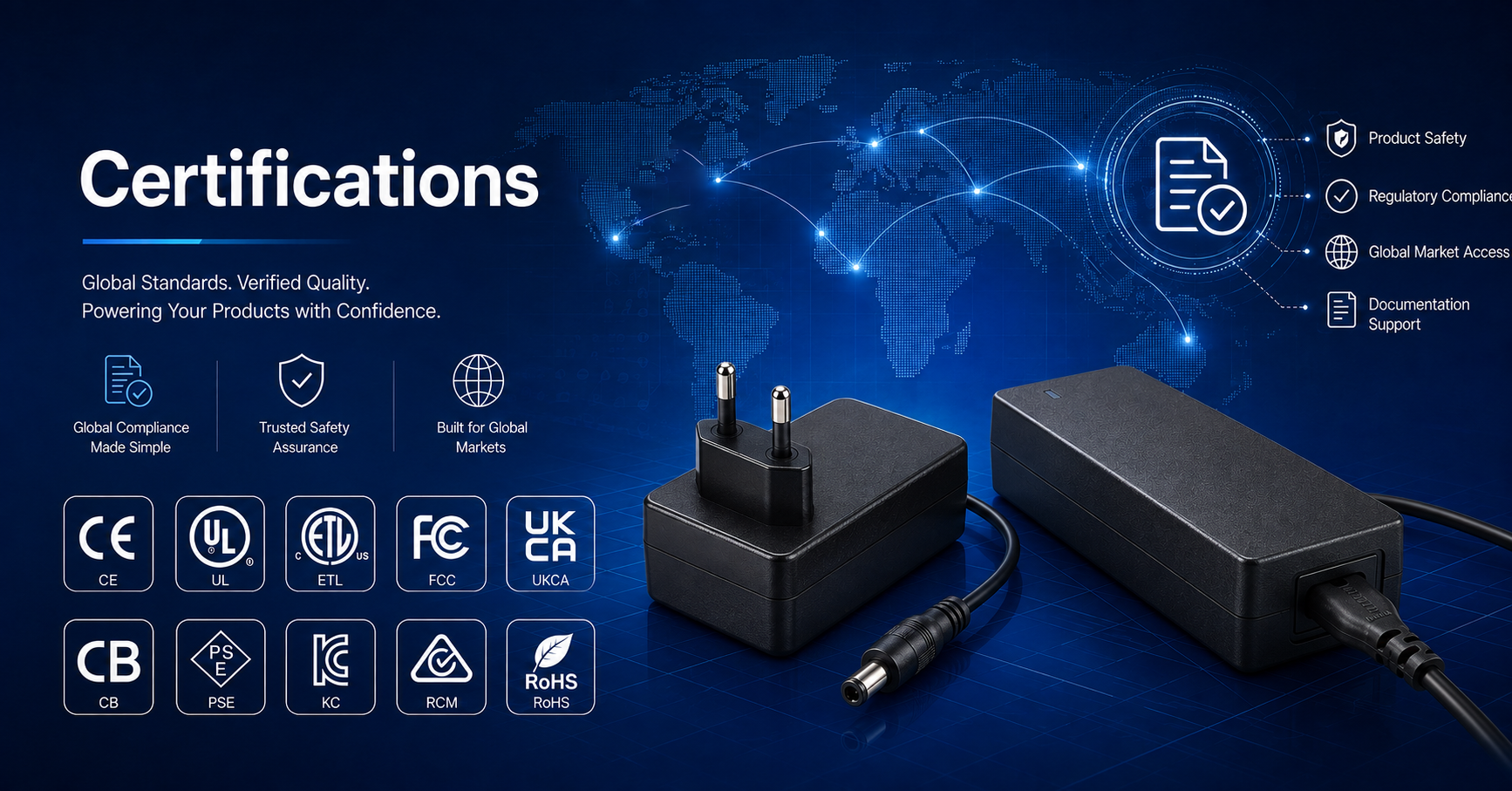
YHYadapter (Shenzhen Yinghuiyuan Electronics Co., Ltd., established 2010) provides AC/DC power adapters, battery chargers, and power supplies with model-specific certifications. UL 62368-1 certified models are available, along with CE, FCC, PSE, KC, RCM, BIS, and CCC — certification availability depends on product model, application requirements and destination market. The YHYadapter engineering team works with NRTL labs to scope the correct standard for each model and provides certification documentation for OEM integration.
Frequently Asked Questions
Which standard applies to a Class 2 power unit?
UL 1310 covers Class 2 power units as a category. Whether it is the applicable route depends on how the product is classified and on the finished equipment it serves — confirmed per model and per target market rather than assumed from the adapter alone.
Can one power supply be covered by both UL 1310 and UL 62368-1?
The applicable standard follows the product and how it is classified, so the two are generally alternatives rather than a pair to satisfy. Where a product could sit in more than one scope, that question belongs with the certification body.
Does UL 62368-1 replace UL 1310?
UL 62368-1 is the safety framework for a broad range of ITE and AV equipment. UL 1310 addresses Class 2 power units specifically, and remains the route for products classified that way.
How long does certification take?
Timelines depend on the standard, the route, and how complete the technical documentation is when the project starts. Certification belongs in the project plan as a stage rather than as a final step.
Is certification available for all YHYadapter models?
Certification is available by model, and depends on the model and the target market. Availability is confirmed per model rather than assumed across a range.
Related Resources
🔌 Related Products
🏭 Related Applications
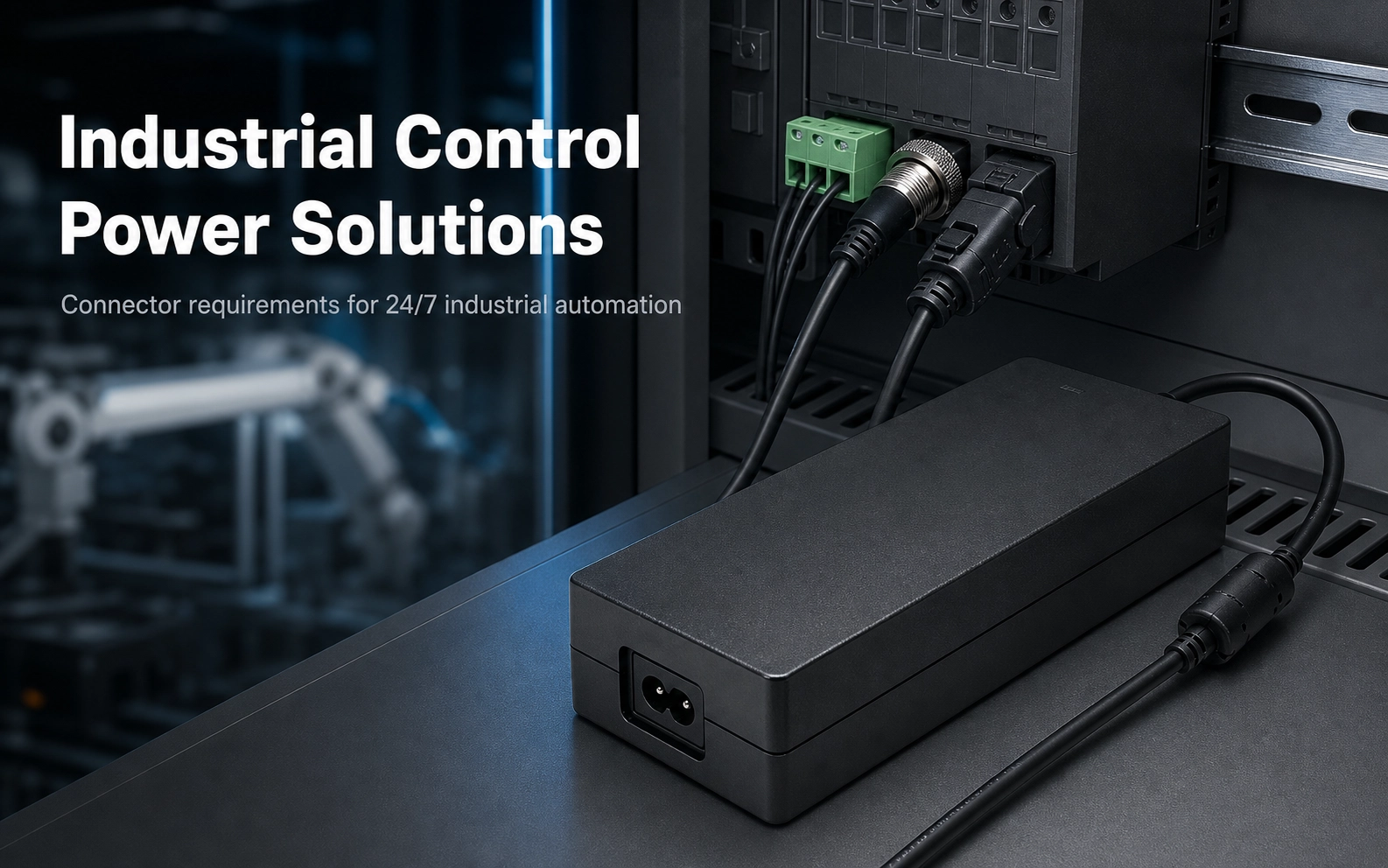
Industrial Control Power Solutions
Power solutions for PLC, CNC, servo and automation equipment
📖 Related Guides
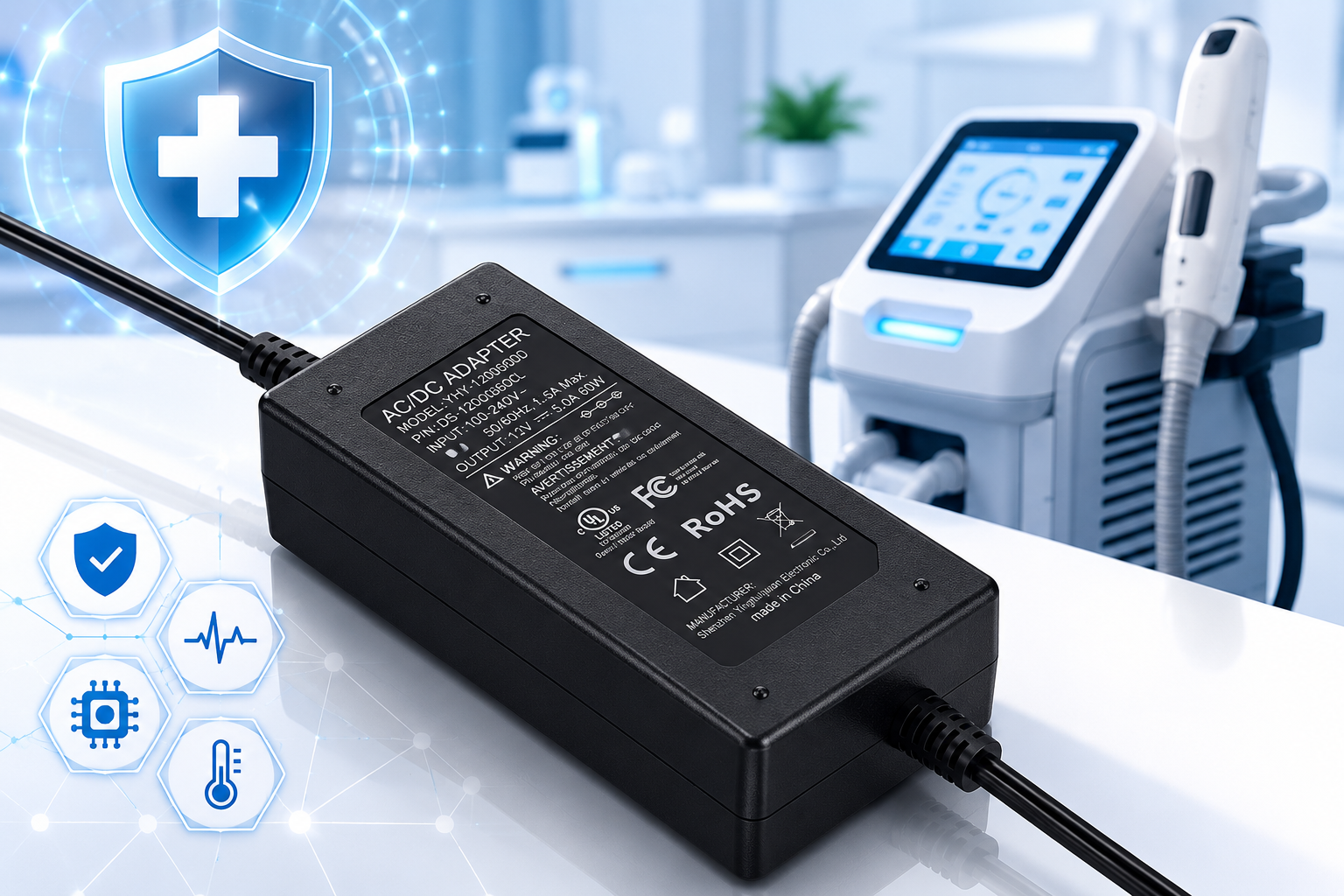
Understanding Medical & Aesthetic Power Supply Certifications
why medical products use IEC 60601-1 rather than ITE standards
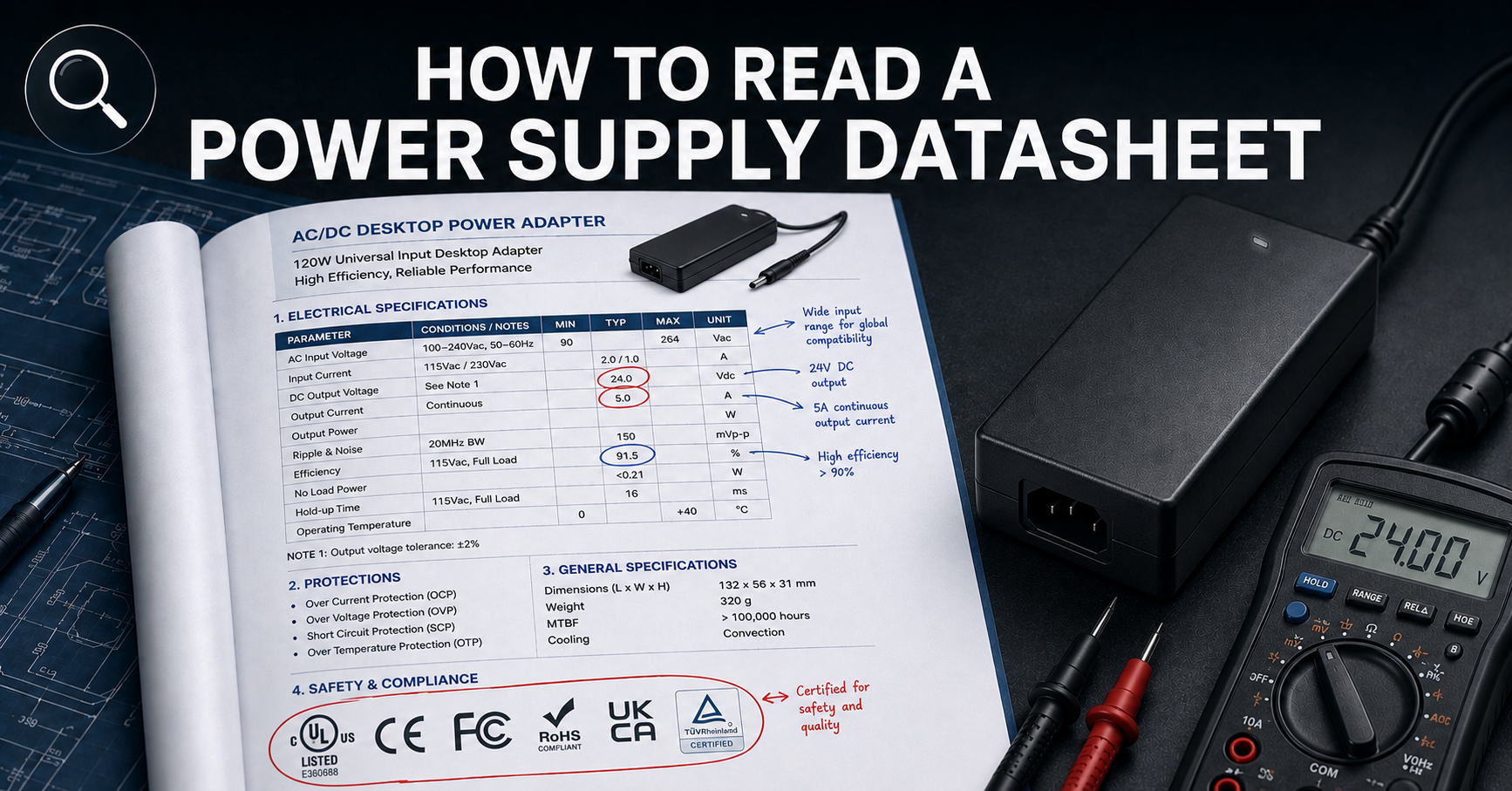
How to Read a Power Supply Datasheet
Learn how to evaluate connector specifications in a datasheet — current ratings, derating curves, certification verification.
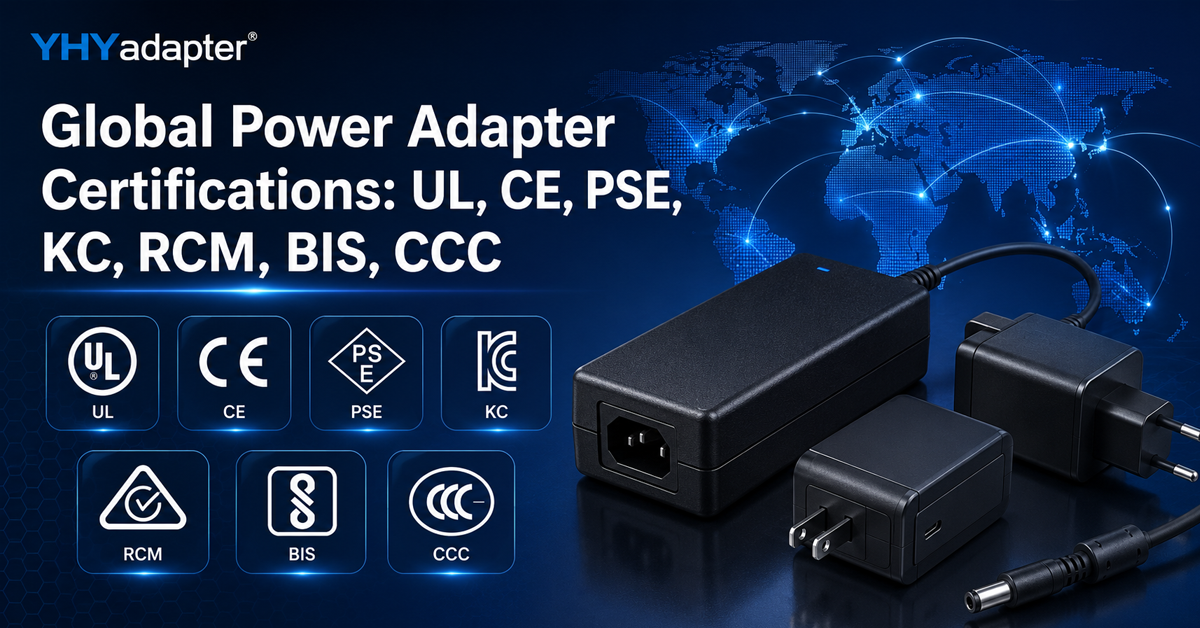
Global Power Adapter Certifications: UL, CE, PSE, KC, RCM, BIS, CCC
certification requirements by market, referenced in the certification timeline section
✅ Related Certifications
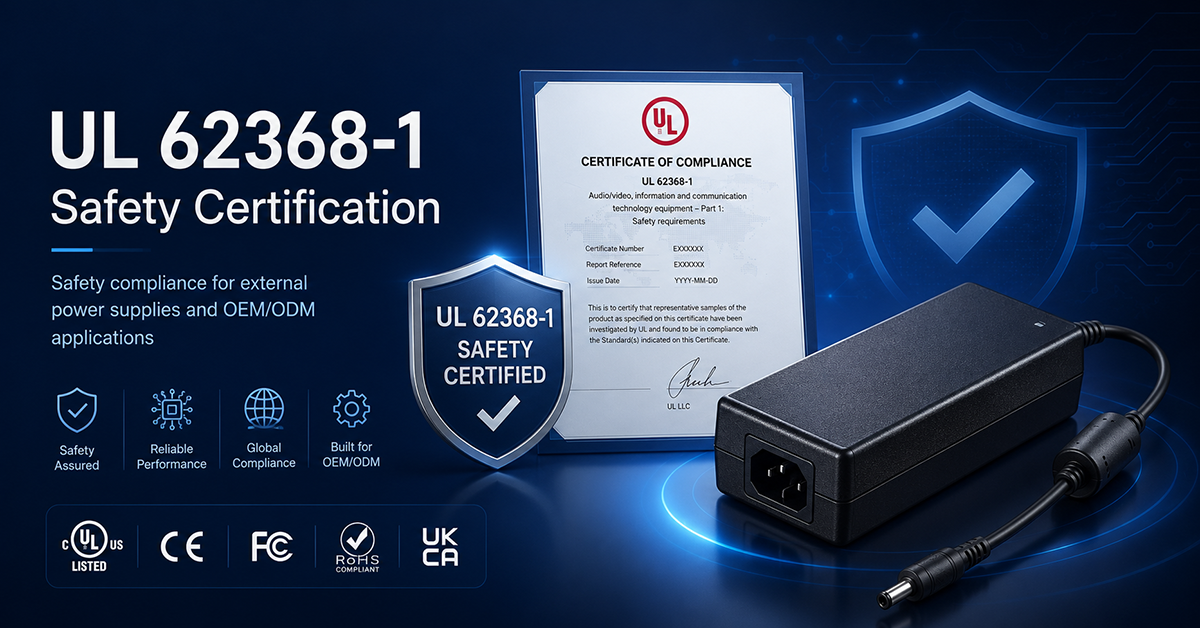
UL 62368-1 Safety Certification
Safety standard covering connector creepage/clearance, temperature rise, and strain relief requirements for IT/AV equipment power adapters.